All Playbooks
Training
4 min read

Turn Your Sled Dog Into a Polite Walker

The Loose-Leash Framework

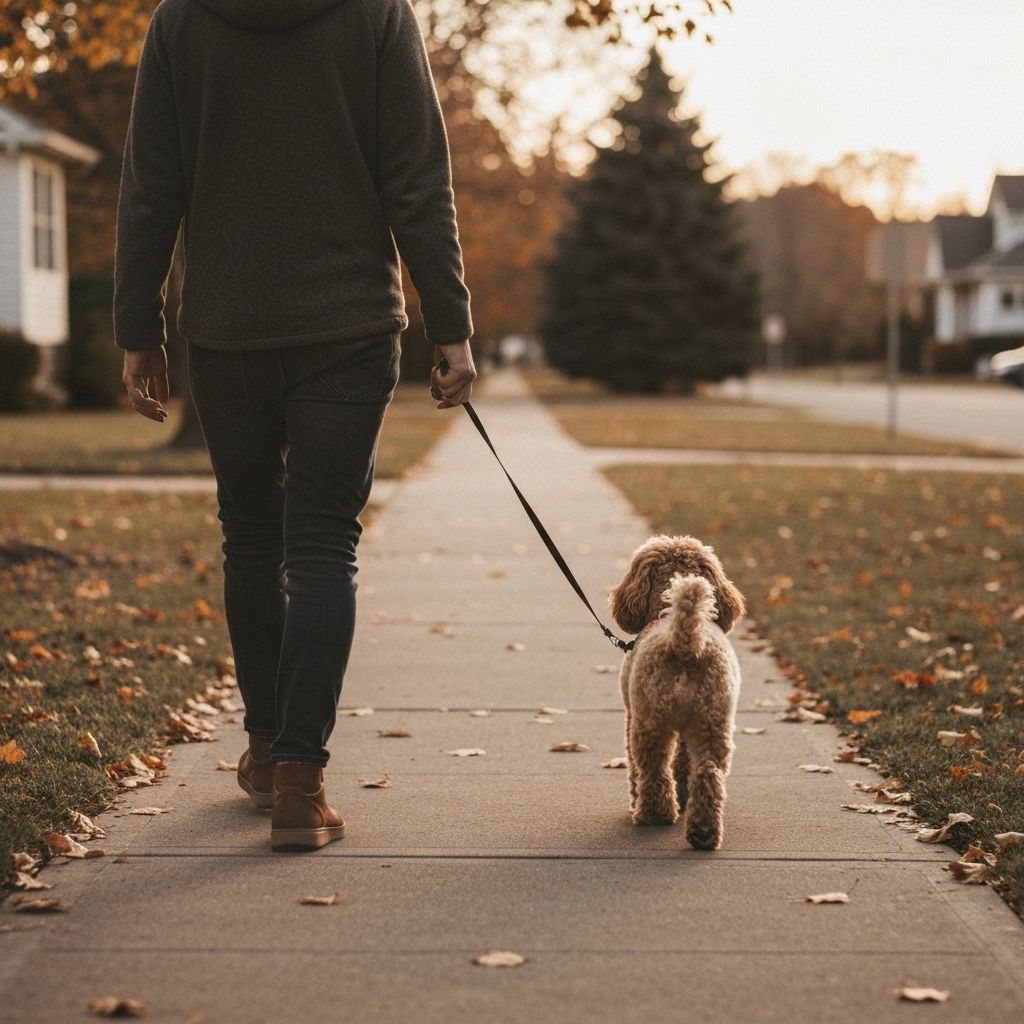
Walking a Cockapoo on a fixed leash down a suburban sidewalk at golden hour

The Reality Check

Your dog is not pulling because they are dominant. They are pulling because it works. Every time the leash goes tight and you take one step forward, you have taught them: Pulling makes the human go faster. The secret is a rigid system called "Stop & Pivot." We teach your dog that a tight leash is actually a brake pedal.

Step 1: The Physics (Equipment & Reinforcement Zone)

You cannot teach loose-leash walking on a flexi-lead. It teaches the dog that constant tension is normal. Use a fixed 6-foot leash (leather or Biothane) and a Front-Clip Harness: when they pull on a front clip, physics turns their shoulders toward you. Load a treat pouch with high-value treats. Wear it on the side you want the dog to walk on.

Before you walk, define Where walking happens. Hold a treat at the seam of your pants (your thigh). When the dog is standing right next to your leg, say "Yes" and feed at your leg. Take one step. Wait for them to find the leg. "Yes" -> feed at the leg. The dog learns the "Vending Machine" is at your thigh, not out in front.

Want the rest of this guide, plus the 1-Page Fridge Printable?

Enter your best email and we'll send it to your inbox instantly. No spam, no drip sequences. Just the guide.

Free forever. We’re too busy with the puppy to send you junk.

How it actually went for us

The "Dizzy" Neighborhood Walks

The first week we implemented the Stop & Pivot, we looked absolutely ridiculous. Keira and Lucy wanted to walk the puppy to the end of the street, which usually takes about five minutes.

Because Penny was so excited, she hit the end of the leash immediately. Tiffany stopped, pivoted, and we walked back toward the house. Penny pulled again. We pivoted again. We spent 20 minutes walking back and forth in front of our own driveway. The kids were dizzy and thought it was a hilarious game, and the neighbors probably thought we had lost our minds.

But it worked. By day three, Penny realized that pulling resulted in a boring U-turn, while keeping the leash loose meant she actually got to go sniff the neighborhood. We traded three days of looking silly for a lifetime of polite walks.

The Playbook Tool Kit

Transparency check: Some of the links below are affiliate links, which means we get a small cut if you buy. But here is our promise: We never recommend garbage. If a brush couldn't handle a Cockapoo coat, or a puzzle toy didn't survive a 9-year-old accidentally stepping on it, it doesn't make this list.

1

The Front-Clip Harness

Back-clip harnesses actually trigger a dog's "opposition reflex," making them want to pull harder (like a sled dog). A front-clip harness redirects their momentum back toward you the second they pull.

2

The 6-Foot Biothane Leash

Retractable leashes teach dogs that pulling creates more freedom. You need a fixed-length leash. We love biothane because it doesn't get heavy when wet and wipes clean of mud instantly.

3

The Silicone Treat Pouch

Essential for the "Check-In Tax." This pouch snaps shut magnetically so treats don't spill when you are bending over to pick up after the dog or managing the kids.